
Toronto Vacant Property Bylaws: Summer Risks Every Owner Should Know

By Oseye Cohen, Property Risk Management Consultant | 12 Gates Property Services
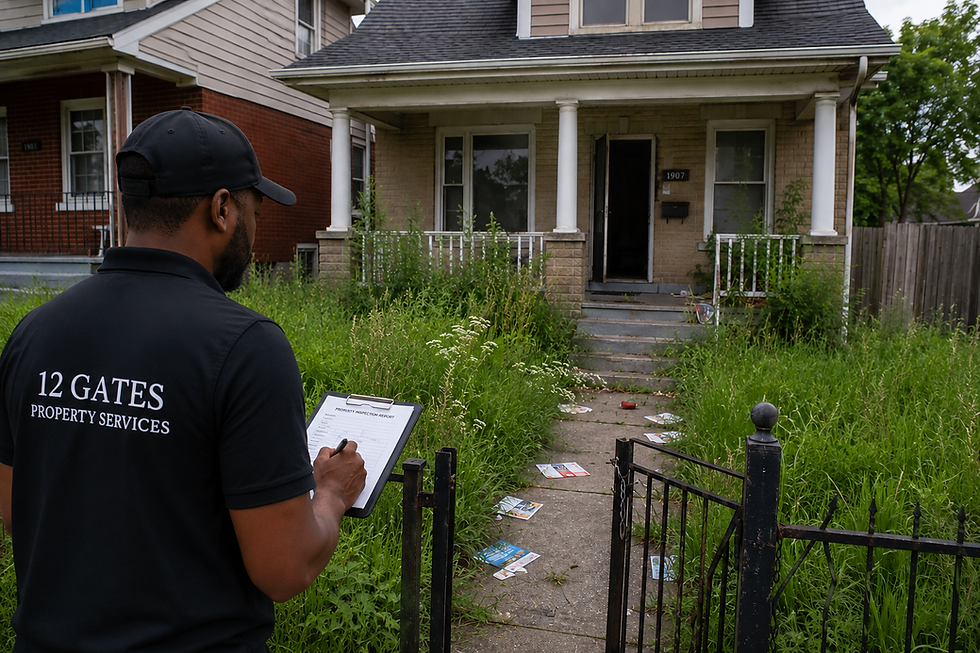
There's a common assumption among property owners that a home sitting vacant for a few weeks — or even a few months — is essentially waiting safely in place. Summer in Toronto has a way of correcting that assumption, sometimes at considerable expense.
For anyone holding a vacant property in the city, whether as a homeowner, estate executor, landlord, lender, or investor, the summer growing season brings a specific and predictable set of risks. Neighbours notice. Municipal inspectors notice. And what begins as a routine maintenance issue can move quickly toward a bylaw violation, an enforcement order, and costs the owner never anticipated.
Summer is, without question, the highest-risk season for vacant properties in Toronto.
What We See on the Ground
At 12 Gates Property Services, our inspections take us to vacant and temporarily unoccupied properties across the GTA throughout the year. The issues that surface during summer are consistent, and they are largely preventable.
Overgrown Grass and Weeds
Overgrown grass is one of the most reliable triggers for complaints under Toronto's property standards framework. The City requires turfgrass to be cut once it exceeds 20 centimetres — roughly 8 inches — and during periods of warm weather and regular rainfall, a vacant property can reach that threshold in two to three weeks. No one is watching. No one is cutting.
Beyond the bylaw concern, overgrown grass communicates something to the surrounding neighbourhood: this property is unoccupied and unmonitored. That signal tends to invite additional problems.
Unsecured Buildings
Vacant property owners carry a responsibility to prevent unauthorized entry and maintain the building in a safe condition. Doors, windows, gates, and other access points need to be properly secured. Where a building appears vulnerable — to trespassers, squatters, vandalism, or fire — the City may require corrective action, and quickly.
From a risk management standpoint, an unsecured vacant building is one of the highest categories of preventable loss we encounter in this work.
General Exterior Maintenance
Vacancy does not pause the Property Standards Bylaw. Owners remain responsible for exterior upkeep, debris and litter removal, structural maintenance, and preventing visible deterioration. A property that looks abandoned tends to attract exactly the kind of scrutiny that compounds its problems — more complaints, more inspections, more enforcement.
Utility Requirements for Extended Vacancies
This one surprises many owners: properties that remain vacant for extended periods may be required to have utilities disconnected under Toronto's vacant and hazardous property requirements. Understanding these obligations early is significantly easier than responding to them under enforcement pressure.
What Enforcement Actually Looks Like
Many owners operate under the assumption that they'll receive several warnings before anything serious happens. That assumption is worth revisiting.
Under Toronto's property standards framework, the City has the authority to issue an Order to Comply, levy fines, lay charges, or arrange for the required work to be completed on the owner's behalf — recovering those costs through the property tax account. That last option is routinely the most expensive, because the owner loses all control over timing, contractor selection, and scope.
Why Summer Is Different
From December through March, the City generally does not accept complaints about grass growth because there is no active growth to speak of. Summer operates under entirely different conditions. Warm temperatures, rainfall, accelerating vegetation growth, increased foot traffic, and longer days all conspire to make vacant properties more visible and more vulnerable.
The properties that draw attention first are the ones showing the clearest signs of neglect: long grass, weeds, litter, unsecured entry points, visible disrepair, unmaintained landscaping. Each of those conditions signals vacancy. And vacancy, once it becomes obvious to the neighbourhood, tends to attract more than just bylaw complaints.
The 12 Gates Approach
At 12 Gates, we approach vacant properties through a risk management lens. Routine inspections, lawn monitoring, contractor coordination, property preservation, and detailed reporting give owners the visibility they need to stay ahead of issues before those issues become violations.
Most bylaw problems don't start with a major emergency. They start with something small that nobody caught in time.
Whether you're travelling for the summer, managing an estate, overseeing a vacant rental, navigating a power of sale, or preparing a property for market, proactive oversight is the most cost-effective tool available.
Visit 12GatesPS.com to book a 15-minute consultation.
FAQ
What are the most common vacant property bylaw issues in Toronto during summer? Overgrown grass and weeds, unsecured buildings, litter and debris, visible disrepair, and general property maintenance violations.
How tall can grass get before it becomes a bylaw issue in Toronto? The City requires turfgrass to be cut once it exceeds 20 centimetres, approximately 8 inches.
Can Toronto charge property owners for bylaw enforcement work? Yes. If an owner fails to comply with an Order to Comply, the City may arrange for the work to be completed and recover the costs through the property tax account.
Do vacant properties need to be secured? Yes. Owners are responsible for preventing unauthorized entry and maintaining the property in a safe and secure condition.
Why are vacant properties more vulnerable during summer? Active grass growth, increased neighbourhood activity, and visible signs of neglect make vacant properties significantly more likely to attract complaints, trespassers, and enforcement action during the summer months.


Comments